In the glorious tapestry of Istanbul’s history, water is the thread that binds everything together. It is not merely a resource for survival; in the Ottoman worldview, it was the essence of civilization, the source of life, and a mirror for the soul. To understand Istanbul, one must understand its relationship with water. And there is no better stage to witness this intimate dance between architecture, humanity, and hydration than at Sultan Selim Hamam. Here, we invite you to explore The Art of Bathing, a practice that transcends simple hygiene to become a profound cultural meditation.
When you step into our sanctuary, you are not just entering a washhouse; you are entering a temple dedicated to Ottoman Water Culture. It is a world where the sound of splashing water is music, where steam is a curtain separating you from the profane world, and where the act of cleansing is elevated to an art form. This guide serves as your curator, walking you through the philosophy, architecture, and sensory experience that awaits you within our historic walls.
Water as a Sacred Element: The Philosophy Behind the Ritual
To the Ottomans, water was sacred. Influenced by Islamic teachings where cleanliness is half of faith, the act of washing was a prerequisite for prayer and a spiritual obligation. However, the Philosophy of Purification went deeper than religious duty. It was about the flow.
In Ottoman culture, standing water was considered unclean. True purification could only come from running water—water that was alive, moving, and vital. This is why you will rarely find bathtubs in a traditional Turkish Bath Ritual. Instead, water must be poured, it must flow over the body and carry away impurities, both physical and spiritual.
At Sultan Selim Hamam, we honor this ancient philosophy. The water that fills our marble basins is not stagnant; it is drawn fresh, mixed to the perfect temperature, and poured over you in a rhythmic cycle. It represents the washing away of sins, stress, and the dust of the material world, leaving the bather in a state of “Abdest” (ablution) or total purity.
The Architecture of Flow: How Sultan Selim Hamam was Built
A hamam is not just a building; it is a machine designed to manipulate water, heat, and light. Sultan Selim Hamam Architecture is a prime example of this functional beauty. Every curve of the dome and every slope of the marble floor was calculated by master builders to serve the water.
The Kurna: More Than Just a Basin
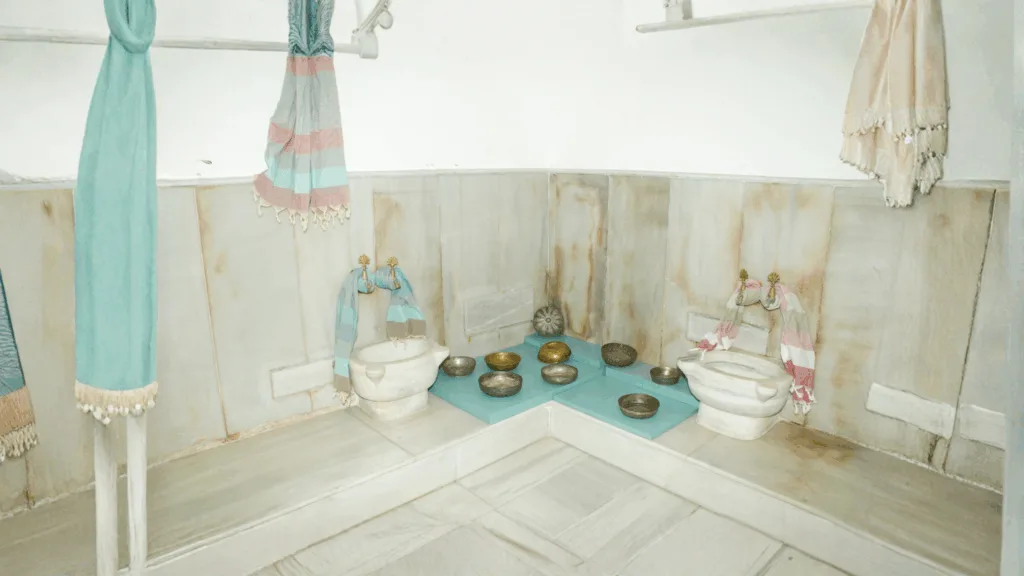
The heart of the bathing station is the Kurna. These are the marble basins lining the walls of the hot room. In the Ottoman Water Culture, the kurna is the altar. It is carved from a single block of marble, durable enough to withstand centuries of heat and water.
When you sit next to a kurna at Sultan Selim Hamam, observe the details. The gentle curve of the lip is designed to let water spill over silently. The copper bowl (Tas) used to scoop the water is perfectly weighted. The sound it makes when it strikes the marble—a resonant, metallic ring—is the signature soundtrack of the hamam. This interaction between the copper, the marble, and the water is a tactile experience that grounds you in the present moment.
The Dome and the Steam: Engineering the Atmosphere
Look up. The dome above you is not just a roof; it is an atmospheric engine. In a Historic Hamam Istanbul, the dome serves two purposes:
- Condensation Control: The curvature ensures that the steam which condenses into water droplets does not rain down on you. Instead, it slides gently down the curved walls to the gutters.
- Light Diffusion: The small glass windows (elephant eyes) filter the sunlight, creating beams that pierce the misty air.
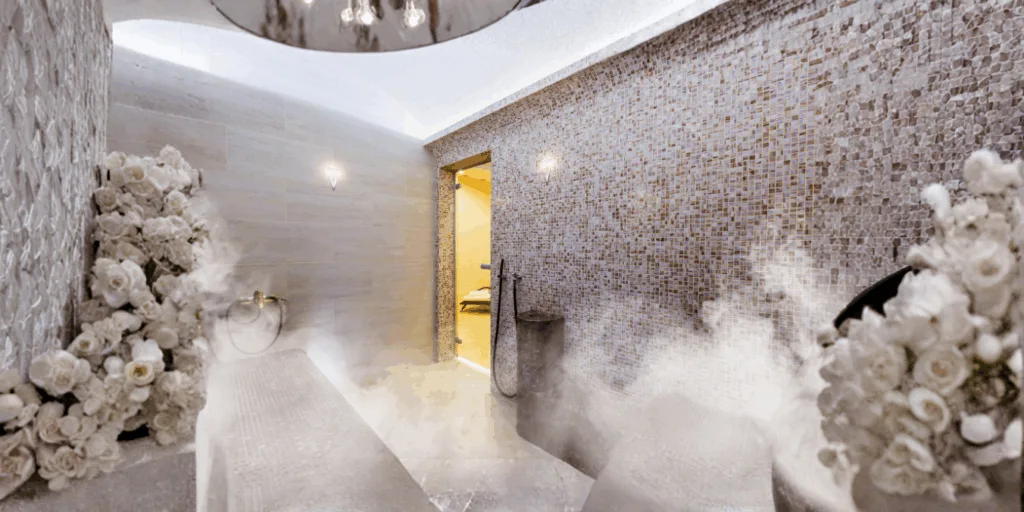
This engineering creates a greenhouse effect, maintaining the high humidity essential for softening the skin, while the Cehennemlik (heating tunnels) beneath the floor radiate heat upwards through the marble.
The Social Art: How the Hamam Shaped Daily Life
In the 16th and 17th centuries, the hamam was the social media of its time. It was the great equalizer. Once inside, stripped of the kaftans, turbans, and silks that denoted rank, a Vizier and a merchant were equal before the heat.
For women, the “Bride’s Bath” or “Birth Bath” were pivotal life events celebrated with music, food, and sherbet within these walls. For men, it was a place to close business deals or discuss politics away from prying ears (the echo of the dome made whispering impossible, but distant eavesdropping equally difficult).
Sultan Selim Hamam preserves this social spirit. While we maintain a serene atmosphere today, the communal nature of the bath remains. It is a place where digital devices are banned, and human connection—even if it is just a shared silence—is restored.
The Sultan Selim Experience: Preserving the Lost Art
In a modern world obsessed with quick showers and efficiency, we champion the slow, deliberate art of the bath. The Sultan Selim Experience is an act of resistance against the rush of modern life.
We view our attendants (Tellaks for men, Natırs for women) not just as staff, but as artisans. The scrub (Kese) is not a rough abrasion; it is a disciplined exfoliation technique passed down through generations. The foam massage (Köpük) is a performance art, where a cloud of bubbles is manipulated to soothe tired muscles.
Why choose us? Because we refuse to turn this sacred ritual into a factory line. We respect the silence, the heat, and the Marble and Water connection. We invite you to surrender control and let the water take over.
A Sensory Guide: What You Will See, Hear, and Feel
To fully appreciate the art, one must engage all five senses. Here is what awaits you:
| Sense | The Experience at Sultan Selim Hamam |
| Sight | Beams of sunlight cutting through thick steam; the glistening of wet white marble; the rich patina of the copper bowls. |
| Sound | The rhythmic splashing of water; the metallic cling of the copper bowl; the echoing footsteps on stone; the deep silence of the dome. |
| Touch | The humid embrace of the steam; the rough texture of the Kese mitt; the silky softness of the olive oil foam; the warmth of the heated belly stone. |
| Smell | The nostalgic scent of laurel and olive oil soap; the mineral smell of hot stone; the crisp freshness of clean water. |
| Taste | The refreshing sweetness of homemade sherbet or Turkish tea served in the cool room after your bath. |
Visitor Etiquette: Respecting the Tradition
Participating in The Sound of Water (Healing) ritual requires a certain etiquette, a respect for the space and the other bathers.
- The Peshtemal: You will be given a traditional cotton wrap. It is customary to keep your lower body covered at all times while moving through the hamam.
- The Slowness: Do not rush. The hamam is not a place to wash and go. Walk slowly on the slippery marble. Lie on the Göbek Taşı (belly stone) for at least 15 minutes to let your pores open.
- The Volume: Speak in hushed tones. The acoustics of the dome amplify sound, so maintaining a library-like volume ensures everyone’s peace.
- The Water: Do not splash others. When using the Kurna, pour water gently over your body.