Istanbul is a city that demands to be explored on foot. From the winding, incline-heavy streets of Galata to the sprawling courtyards of the Topkapi Palace, the “City on Seven Hills” is a visual masterpiece but a physical challenge. If you are reading this, you likely know the feeling: the burning sensation in your calves, the stiffness in your lower back, and the sheer exhaustion of having clocked over 15,000 steps on unforgiving cobblestones.
While the beauty of the Hagia Sophia is undeniable, the physical toll of the “Museum Shuffle”—standing in slow-moving lines and navigating uneven pavement—is real. This is where Sultan Selim Hammam wellness comes into play. We are not just a historical site; for the weary traveler, we are a recovery station. The traditional ritual offered here is, in essence, an ancient form of sports therapy designed to reboot the body. Here is how the specific techniques of the Ottoman massage benefits your tired body and why it is the ultimate cure for walking tour fatigue.
The “Istanbul Workout”: Why Your Body Aches After Sightseeing?
Before understanding the cure, it is essential to understand the injury. Exploring Istanbul is not like walking on a treadmill or a paved sidewalk. The historic peninsula is paved with ancient cobblestones. While picturesque, these stones create an uneven surface that forces your ankles, knees, and hips to make thousands of micro-adjustments with every step to maintain balance. This engages stabilizer muscles that you rarely use in your daily life.
Furthermore, the “stop-and-go” nature of tours—walking briskly to a site and then standing still for 30 minutes to listen to a guide—causes blood to pool in the legs. This leads to swelling and the accumulation of lactic acid, the primary culprit behind muscle soreness. You aren’t just tired; you are physically inflamed. A standard hotel shower might wash off the dust, but it cannot address this deep-seated muscular fatigue. You need a spa treatment for soreness that combines heat, friction, and pressure.
| Feature | Standard Hotel Shower | Sultan Selim Hammam Experience |
| Heat Source | Hot water (surface only) | Radiant Infrared Heat (Deep tissue penetration) |
| Exfoliation | Standard sponge | Professional Kese (Boosts heavy circulation) |
| Massage | None | Deep Tissue Manipulation (Lactic acid release) |
| Result | Cleanliness | Full Muscular Recovery |
What exactly is the Traditional Ottoman Massage?
When we speak of the massage at Sultan Selim, we are referring to a vigorous, full-body manipulation that has been refined over centuries. Unlike the gentle, oil-based strokes of a Swedish massage, the Ottoman style is dynamic. It is performed on a warm marble surface, utilizing foam and the therapist’s body weight to knead out tension.
It is a discipline that was originally kept alive to serve the Janissaries (elite soldiers) and Sultans, keeping them physically fit for campaigns. Today, it serves the modern explorer recovering from walking tours Istanbul. The process is holistic, targeting the skin, the muscles, and the joints in a specific sequence designed to maximize relief.
Way 1: The Marble Heat (Göbektaşı) Melts Muscle Tension
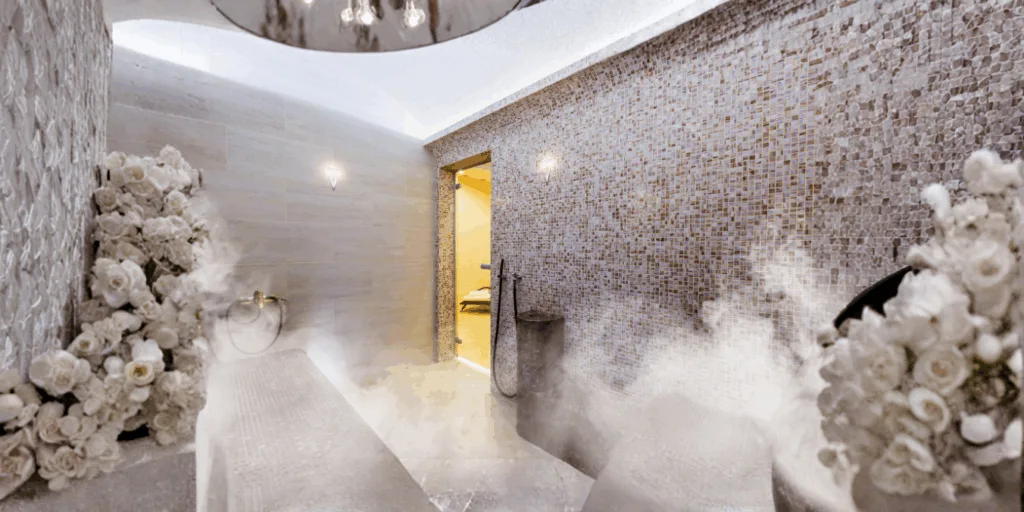
The recovery begins before a single hand touches you. Upon entering the Hararet (hot room), you will lie down on the Göbektaşı, the central hexagonal marble stone. This stone is heated from beneath by a traditional wood or coal furnace system (or modern equivalent), maintaining a temperature that is hot but bearable.
This is passive thermal therapy. As you lay your tired back and legs against the hot marble, the heat penetrates deep into the muscle fibers. This process induces vasodilation, the widening of blood vessels.
- Increased Blood Flow: Oxygen-rich blood rushes to your tired calves and hamstrings.
- Softening Tissue: The heat physically softens the fascia (connective tissue) that tightens up after a long day of walking.
- Mental Reset: The heat forces your parasympathetic nervous system to kick in, moving your body from “fight or flight” (navigating crowds) to “rest and digest.”
By the time the attendant arrives, your muscles are already loose, pliable, and ready to be worked on. This preparatory phase is why Sultan Selim is considered the best hamam for tired legs in the region.
Way 2: The “Kese” Scrub Boosts Blood Circulation Immediately
The Kese is a coarse, natural fiber mitt used for exfoliation, but its benefits go far beyond removing dead skin. In the context of fatigue recovery, the Kese acts as a powerful friction massage. The attendant scrubs your body with long, vigorous strokes, moving from the extremities toward the heart.
This direction is intentional. It assists the venous return system, helping to push stagnant blood and lymph fluid out of your swollen feet and legs and back into circulation.
- Wake Up Call: The friction stimulates the nerve endings, creating a tingling sensation of aliveness.
- Detoxification: By scrubbing away the barrier of dead skin and sweat, your skin can breathe and expel toxins more efficiently.
After a day of feeling “heavy” and lethargic from walking, the Kese provides an immediate feeling of lightness. You will feel 5 pounds lighter simply because your circulation has been kickstarted.
Way 3: The Foam Massage Flushes Out Lactic Acid
Once your skin is scrubbed and your circulation is active, the Tellak (attendant) prepares the foam. Using a traditional mesh bag, they create a mountain of bubbles from olive oil soap. This foam acts as a lubricant for the Deep tissue foam massage.
This is the core of the healing process. The attendant uses the heel of their hand and their forearm to apply long, gliding pressure along the length of your muscles. This technique is specifically effective for lactic acid release hammam therapy. The pressure forces the lactic acid—which crystallizes in the muscles causing that “burning” pain—out of the tissue and into the bloodstream, where it can be processed by the liver.
Particular attention is paid to the calves (gastrocnemius) and thighs (quadriceps), the victim zones of Istanbul’s hills. The soapy foam allows the therapist to slide deep into the muscle belly without causing friction burn, providing a deep tissue release that feels incredibly soothing rather than painful.
Way 4: Joint Mobility: Stretching Techniques of the Tellaks
The Ottoman massage is not a passive experience; it is interactive. A skilled Tellak understands that stiffness isn’t just in the muscles, but in the joints. After the foam massage, the attendant will often perform gentle stretching and mobilization techniques.
This usually involves:
- Ankle Rotations: Releasing the stiffness in the ankles caused by uneven cobblestones.
- Leg Stretches: Gently pushing the leg towards the chest to stretch the hamstrings and lower back.
- Shoulder Manipulation: Opening up the chest and shoulders, which often hunch forward after carrying a backpack all day.
This element of the ritual serves as a Turkish bath foot massage and full-body chiropractic adjustment rolled into one. It restores the range of motion in your hips and knees, ensuring that you can wake up the next morning ready to tackle the Grand Bazaar without limping.
Way 5: The “Cold-Warm” Cycle for Total Recovery
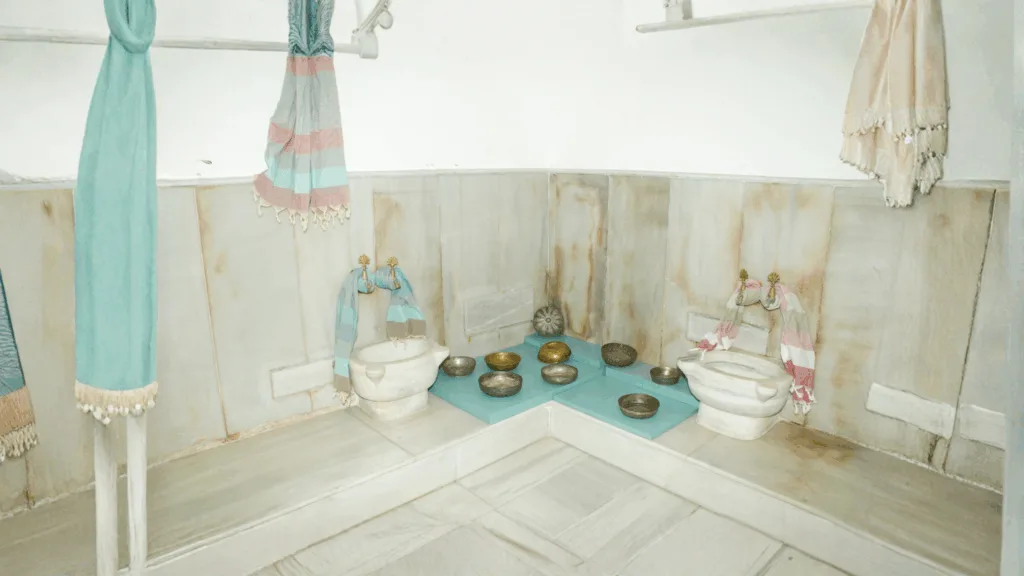
The finale of the Sultan Selim experience is the contrast therapy. Throughout the washing process, bowls of warm water are poured over you. However, to seal the recovery, many guests opt for a final splash of cooler water or a rest in the cooler intermediate room.
Science supports this “contrast hydrotherapy.” Switching from the intense heat of the marble and steam to a cooler temperature forces the blood vessels to constrict quickly. This pumping action acts like a vascular flush, driving out any remaining inflammation. It is a technique used by professional athletes to prevent delayed onset muscle soreness (DOMS). When you leave the hammam, your body feels invigorated, tight, and refreshed, rather than lethargic.
Visitor Guide: When is the Best Time to Visit for Recovery?
Timing is everything when it comes to maximizing the Ottoman massage benefits. We strongly advise against visiting immediately after a heavy meal. The best window for a recovery session is in the late afternoon or early evening, ideally between 5:00 PM and 8:00 PM.
By visiting at this time, you:
- Conclude the Day: You wash off the city dust and sweat before dinner.
- Pre-Sleep Ritual: The relaxation induced by the hammam guarantees a deep, restorative sleep, which is essential for muscle repair.
- Appetite Stimulation: The vigorous massage increases metabolism, making your Turkish dinner taste even better.
Visiting Sultan Selim Hammam after a long day isn’t just an indulgence; it is a strategic move to ensure you have the energy to enjoy the rest of your vacation.